OPEC: Nigeria Greatly Affected by Falling Crude Prices Worldwide


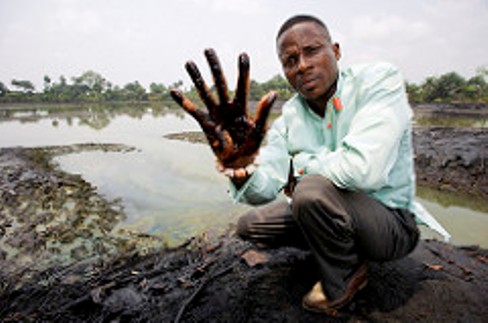
Eric Dooh at home in Goi village showing oil pollution
LAGOS FEBRUARY 23RD (URHOBOTODAY)-The Organisation of Petroleum Exporting Countries (OPEC) announced recently that there are five countries that are
In an official white paper released by the oil and gas organization, they mentioned that the five countries were selected amongst several others after showing serious effects on their nation’s currency value, due to the recession on the global oil market.
“In most cases, the scenario is similar: over the past decade, oil exporting countries used excessive revenues from oil to expand public services, or simply pursue populist policy in order to buy political stability. Once oil prices started to fall, the budgets did not shrink accordingly, which created a wide gap between the oil revenues and swelling fiscal demands,’’ mentioned by OPEC in their report.
Despite the volatility of oil and gas prices,
year.
In Iraq, one of the popular oil and gas extraction sites in the world, crude producing companies continue to build gas treatment plants and are hiring local employees for project management, installation and construction work. This is a strong indication that crude extraction is showing no signs of slowing down, even with its global prices
threatening many oil producing nations like Nigeria. Depreciation in the nation’s currency value is very common in oil exporting countries due to the unstable price of crude. The lowering price of oil is wreaking havoc in many countries whose economies are greatly dependent on crude. Governments are forced to devalue their currencies to stem the rapid outflow of foreign reserves.
‘’An unwanted consequence is almost always the rise in inflation and household prices, along with a decline in living standards and stalled economic growth,’’ OPEC said.
The Nigerian government, in particular, mentioned that they are looking to borrow from the World Bank as much as $9 billion to fund its economy. The country is Africa’s biggest oil producer and has the continent’s largest economy. If things continue to go south, its deficit is predicted to reach 3 trillion naira ($15 billion) this year.
Currently, Nigeria is suffering from regular power cuts and fuel shortages, as it loses its capacity to refine its own crude.